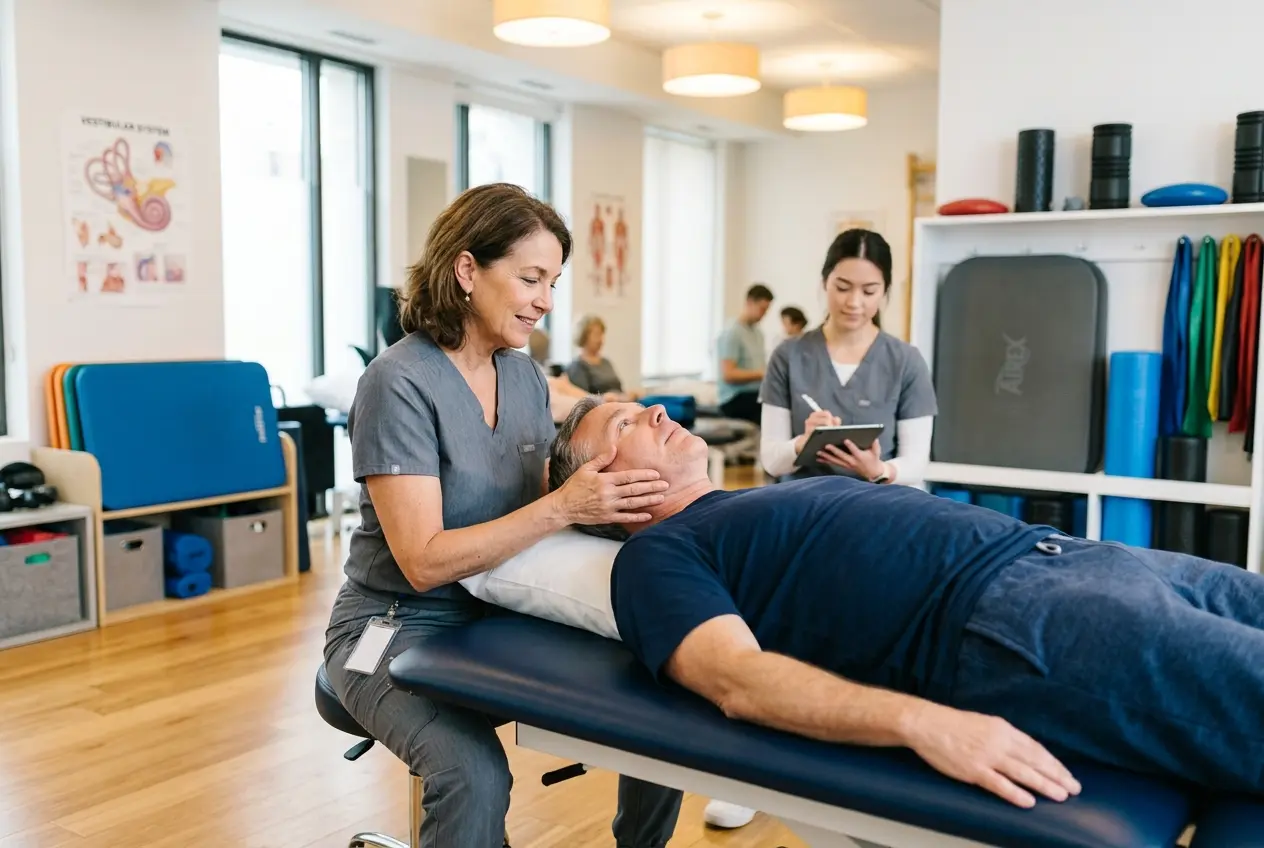
Boise's variable elevation changes - from downtown to the foothills - can exacerbate vestibular issues. Our certified vestibular therapists help patients navigate these terrain challenges while managing dizziness and imbalance.
We treat common conditions like BPPV (benign paroxysmal positional vertigo), which often affects active Boiseans who frequently change head positions during activities like gardening or home maintenance. For older adults in communities like Harris Ranch, we address age-related balance decline with fall prevention strategies tailored to their living spaces.
Our vestibular rehab includes gaze stabilization exercises helpful for drivers navigating Boise's growing road network, and habituation techniques for those sensitive to visual motion in crowded places like the Boise Towne Square mall. We consider how seasonal changes - from winter ice to summer dust storms - impact balance safety.
We treat common conditions like BPPV (benign paroxysmal positional vertigo), which often affects active Boiseans who frequently change head positions during activities like gardening or home maintenance. For older adults in communities like Harris Ranch, we address age-related balance decline with fall prevention strategies tailored to their living spaces.
Our vestibular rehab includes gaze stabilization exercises helpful for drivers navigating Boise's growing road network, and habituation techniques for those sensitive to visual motion in crowded places like the Boise Towne Square mall. We consider how seasonal changes - from winter ice to summer dust storms - impact balance safety.
Our Process
- 01 Step 1: Comprehensive vestibular assessment including positional testing
- 02 Step 2: Customized exercise program based on specific deficits
- 03 Step 3: Progressive challenge of balance systems
- 04 Step 4: Home safety assessment and community navigation strategies
Benefits
- Reduced dizziness symptoms
- Improved confidence in movement
- Decreased fall risk
- Better ability to navigate Boise's varied terrain
Frequently Asked Questions
How long does vestibular rehabilitation take?
Most patients see significant improvement in 6-8 weeks, though this varies based on condition severity and individual factors like age and overall health.
Can vestibular therapy help with motion sickness on winding foothills roads?
Yes, we can train your vestibular system to better tolerate motion stimuli, helpful for drives up to Bogus Basin or through the winding roads of the North End.
Do you treat concussions with vestibular symptoms?
Absolutely. We work with many local athletes and active individuals recovering from concussions, addressing both vestibular and visual components of post-concussion syndrome.